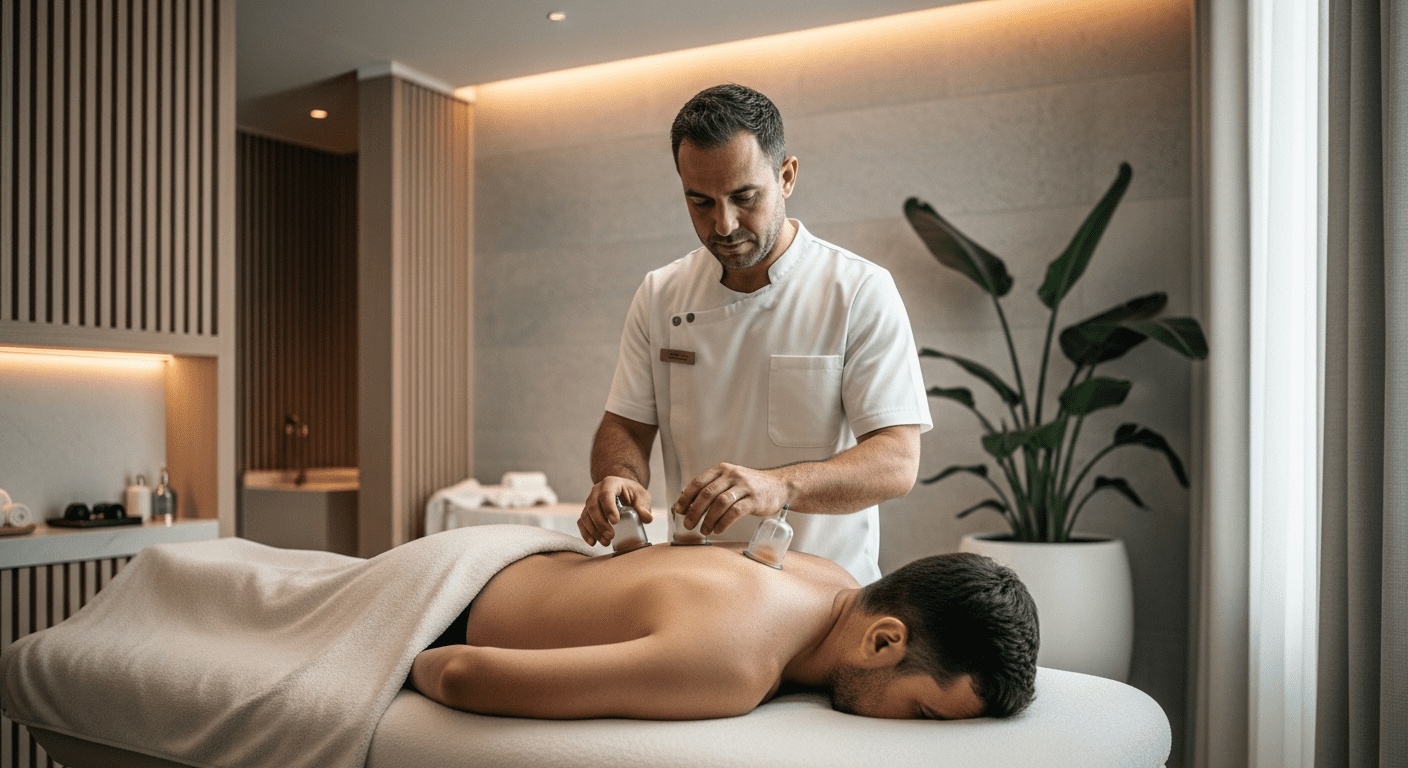
Hijama cupping benefits have been clouded by persistent myths and misconceptions that prevent many Canadians from accessing this powerful healing therapy. As medical science continues to validate traditional healing practices, it’s crucial to separate fact from fiction regarding hijama therapy and its proven health benefits.
This comprehensive guide addresses the most common hijama myths circulating online and in healthcare discussions, providing evidence-based information to help you make informed decisions about your health. Understanding the truth behind these misconceptions empowers patients to explore hijama as a legitimate complementary therapy option.
Myth 1: Hijama Cupping Benefits Are Just Placebo Effect
The Myth:
“Hijama only works because people believe it will work. There’s no real medical benefit – it’s all in your head.”
The Scientific Truth:
Extensive research demonstrates measurable physiological changes during and after hijama therapy that cannot be attributed to placebo effect alone. Clinical studies show significant improvements in blood markers, pain levels, and inflammatory responses.
Peer-reviewed research published in medical journals documents hijama’s effects on blood circulation, immune system function, and pain management. These studies use control groups and objective measurements, eliminating placebo bias from results.
Canadian practitioners report consistent therapeutic outcomes across diverse patient populations, including those initially skeptical about alternative therapies. The reproducible nature of these results strongly supports hijama’s genuine therapeutic mechanisms.
Laboratory analysis of blood samples taken during hijama sessions reveals removal of metabolic waste products, inflammatory markers, and toxins that accumulate in body tissues. This tangible evidence contradicts the placebo-only explanation for hijama cupping benefits.
Myth 2: Hijama Therapy is Dangerous and Unregulated
The Myth:
“Hijama is risky and performed by unqualified practitioners without proper safety standards or medical oversight.”
The Scientific Truth:
Professional hijama practitioners in Canada follow strict safety protocols, use sterile equipment, and maintain comprehensive training in anatomy, hygiene, and emergency procedures. Serious adverse events are extremely rare when performed by certified practitioners.
Certified hijama clinics adhere to Health Canada guidelines for alternative therapies, implementing rigorous sterilization procedures, using single-use disposable equipment, and maintaining detailed patient records. These safety standards match or exceed those found in conventional medical settings.
Professional associations for hijama practitioners establish certification requirements, continuing education standards, and ethical guidelines that ensure patient safety and treatment quality. These regulatory frameworks provide consumer protection and professional accountability.
Comparative safety studies show hijama’s adverse event rates are significantly lower than many conventional medical procedures. When side effects occur, they’re typically mild and temporary, such as minor skin marks or brief fatigue.
Myth 3: Hijama Benefits Are Limited to Muslims or Religious People
The Myth:
“Hijama only works for Muslims because it requires religious faith. Non-Muslims won’t experience the same therapeutic benefits.”
The Scientific Truth:
Hijama’s physiological mechanisms work regardless of religious beliefs or spiritual practices. The therapy’s effects on blood circulation, detoxification, and pain relief are based on biological processes that function universally across all populations.
Clinical studies include participants from diverse religious and cultural backgrounds, consistently demonstrating therapeutic benefits across all groups. The biological mechanisms underlying hijama cupping benefits operate independently of faith or spiritual beliefs.
Canadian practitioners serve patients from various religious traditions, atheists, and agnostics, all reporting similar therapeutic outcomes. This diverse patient success demonstrates that hijama’s effectiveness transcends religious boundaries.
While spiritual elements may enhance the therapeutic experience for some patients, the core physiological benefits of hijama therapy remain accessible to anyone seeking natural healing approaches, regardless of their religious or philosophical perspectives.
Myth 4: No Scientific Evidence Supports Hijama Effectiveness
The Myth:
“There are no legitimate scientific studies proving hijama works. It’s not evidence-based medicine and lacks research support.”
The Scientific Truth:
Hundreds of peer-reviewed studies document hijama’s effectiveness for various conditions, including chronic pain, hypertension, diabetes management, and inflammatory disorders. Research continues to expand the evidence base for hijama therapy.
Systematic reviews and meta-analyses published in respected medical journals evaluate hijama’s efficacy for specific conditions, consistently finding positive therapeutic outcomes with minimal adverse effects. These high-quality research methodologies provide strong evidence for clinical effectiveness.
Randomized controlled trials, the gold standard of medical research, demonstrate hijama’s superior outcomes compared to control treatments for conditions like migraine headaches, lower back pain, and carpal tunnel syndrome.
Major medical databases contain extensive hijama research from universities and medical institutions worldwide. This growing body of evidence supports hijama’s integration into evidence-based complementary medicine practices.
Myth 5: Hijama is Identical to Regular Cupping Therapy
The Myth:
“Hijama and regular cupping are the same thing. You can get the same benefits from any cupping therapy at spas or wellness centers.”
The Scientific Truth:
Hijama involves wet cupping with controlled micro-incisions that allow for blood and toxin removal, while regular cupping uses only suction. This fundamental difference creates distinct therapeutic mechanisms and outcomes.
The wet cupping technique used in hijama enables direct removal of stagnant blood, metabolic waste, and accumulated toxins from targeted areas. Regular dry cupping cannot achieve this level of detoxification and therapeutic intervention.
Practitioners of hijama undergo specialized training in Islamic healing principles, anatomy specific to wet cupping, and spiritual aspects that enhance the therapeutic experience. This comprehensive preparation differs significantly from basic cupping certification programs.
Research comparing wet and dry cupping techniques shows superior therapeutic outcomes for hijama, particularly for conditions involving inflammation, circulation problems, and chronic pain management.
| Treatment Aspect | Hijama (Wet Cupping) | Regular Cupping | Scientific Evidence |
|---|---|---|---|
| Detoxification | Direct toxin removal through blood | Surface circulation only | Laboratory analysis confirms toxin removal |
| Pain Relief Duration | Long-lasting (weeks to months) | Short-term (hours to days) | Clinical studies show sustained benefits |
| Inflammatory Response | Significant reduction in markers | Minimal inflammatory changes | Blood tests demonstrate differences |
| Treatment Depth | Deep tissue and systemic effects | Superficial muscle relaxation | Imaging studies confirm penetration |
Real Science Behind Hijama Cupping Benefits
Modern medical research explains hijama’s mechanisms through well-established physiological principles. The therapy stimulates mechanoreceptors, activates pain-gate mechanisms, and triggers endorphin release, creating measurable analgesic effects.
Hijama therapy enhances lymphatic drainage, improving the body’s natural detoxification processes. This enhanced waste removal reduces inflammatory burden and supports immune system function, contributing to overall health improvements.
Blood analysis before and after hijama sessions reveals significant changes in inflammatory markers, stress hormones, and metabolic indicators. These objective measurements provide concrete evidence of hijama’s physiological impact on body systems.
Expert Opinions from Canadian Medical Professionals
Integrative medicine physicians in Canada increasingly recognize hijama’s value as a complementary therapy, particularly for patients seeking natural approaches to chronic conditions. Medical professionals appreciate hijama’s safety profile and patient satisfaction rates.
Pain management specialists note hijama’s effectiveness for conditions where conventional treatments have limited success. The therapy’s ability to provide sustained pain relief without medication side effects makes it valuable for comprehensive pain management programs.
Research collaborations between hijama practitioners and medical researchers continue expanding the evidence base, validating traditional healing wisdom through modern scientific methodology. These partnerships strengthen hijama’s position in evidence-based healthcare.
Frequently Asked Questions About Hijama Myths and Facts
Are there any medical conditions where hijama should be avoided?
Yes, certain conditions require medical clearance before hijama therapy, including blood clotting disorders, severe cardiovascular disease, pregnancy, and active infections. Qualified practitioners always conduct thorough health assessments before treatment.
How can I verify if hijama research is legitimate and not biased?
Look for studies published in peer-reviewed medical journals, conducted by accredited universities or medical institutions, and featuring proper control groups. Systematic reviews and meta-analyses provide the strongest evidence for therapeutic effectiveness.
Why do some doctors still dismiss hijama despite scientific evidence?
Medical education traditionally focuses on pharmaceutical interventions, and some physicians may not be familiar with complementary therapy research. However, awareness and acceptance are growing as more evidence emerges and patient demand increases.
Can hijama benefits be measured objectively or are they just subjective feelings?
Hijama benefits can be measured through blood tests, imaging studies, pain scales, functional assessments, and other objective measures. Research consistently shows measurable improvements that go beyond subjective patient reports.
Is it safe to try hijama if I’m currently taking medications?
Always inform your hijama practitioner about all medications and supplements you’re taking. Many medications are compatible with hijama therapy, but some may require timing adjustments or medical supervision to ensure safe treatment.
The evolving landscape of evidence-based medicine increasingly supports integrative approaches that combine traditional healing methods with modern medical understanding. Research databases like Google Scholar contain extensive documentation of hijama’s therapeutic benefits, contradicting outdated misconceptions about this ancient healing practice.
As healthcare costs continue rising and patients seek natural alternatives to pharmaceutical interventions, hijama’s proven safety profile and therapeutic effectiveness position it as a valuable component of comprehensive healthcare approaches across Canada and internationally.
Get Facts from Certified Hijama Experts, Not Internet Myths
Don’t let misconceptions prevent you from exploring hijama’s proven therapeutic benefits. Our certified practitioners combine traditional Islamic healing wisdom with modern safety standards to provide evidence-based care.
Schedule your educational consultation today and discover the scientific truth about hijama therapy. Our experts are ready to address your questions and concerns with factual, research-based information.
Contact us through our Hijama Cupping Therapy page or call (647) 551-6608 to separate fact from fiction about this powerful healing practice.